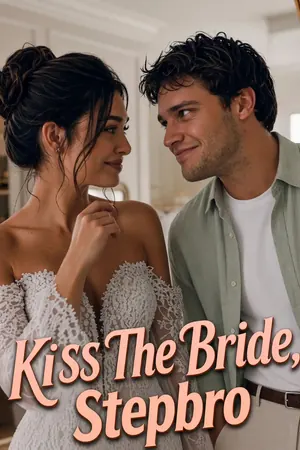
My Best Friend's Bride review
Two days before a wedding, the groom's best man gets cornered by the bride herself. My Best Friend's Bride is a tight affair drama built around one ticking clock, and it handles that clock better than most series in the catalogue. It sits near the top of our ranking for good reasons: a confident lead, a clear emotional stake and short scenes that keep moving. The writing leans on familiar forbidden-fruit lines, but the pressure holds, and the free part is the best argument for finishing it.
The story so far
The setup is simple and efficient. A best man arrives at the house two days ahead of the ceremony. The groom, his old friend, is busy with the caterer and waves him toward the bride, Bri, who needs a hand with her dress fitting. Upstairs, she tells him the groom is useless at that sort of thing and nods off whenever it counts. Then she asks the question that hangs over everything: was the best man ever hers, years back? He tries to keep his distance and mostly fails at it.
Episode 2 tightens the screws. Alone with his own thoughts, he promises himself he will do the decent thing, and then cannot stop watching her. Bri argues that the danger is exactly the attraction, and she wants help with her zipper before the fiance returns. The episode ends on the groom shouting about his keys from another room.
What works
The countdown is the star here. Because the wedding is only two days away, every scene carries a deadline, and the series never wastes a minute on filler. Episode 1 gets from arrival to loaded question in a handful of beats, which is exactly how a short format should work.
Bri is the second asset. She is playful and direct, she stays ahead of him in every scene, and the entire dynamic runs on her confidence rather than on the man's indecision. Her teasing has a purpose, which makes it feel like character instead of decoration.
The guilt is the third. The best man is not a smirking villain; he visibly argues with himself, and that gives the story something to chew on beyond flirtation. The interrupted ending of episode 2, with the groom's voice booming from elsewhere, is a neat jolt of comedy and danger in the same breath.
What doesn't
The groom's habit of dozing off at the exact right moment is convenient to the point of silliness. A story this focused on tension needs its obstacles to feel earned, and a sleeping husband is a shortcut. The dialogue also reaches for stock forbidden-fruit phrasing more than once, so if you have watched a few affair stories you will see several lines coming.
The AI look is the usual one: smooth faces, slightly stiff movement, and settings that feel more like backdrops than rooms. Runtime is brief at around six minutes for the whole run of free episodes, so there is scarce space to build texture around the supporting cast. The groom is more a device than a person.
The free part
Episode 1 costs nothing and asks for nothing; episode 2 wants only a login, still free. Together they cover the arrival, the fitting, the first real push and the cliffhanger. That is plenty to judge the voice, the pacing and the lead, and plenty to decide whether the premise is for you. It is rare for the free part of a series to feel this complete as a mini-story while still leaving a clear question open. The only thing you will not learn is how the series resolves its central dilemma.
Worth the tokens?
Finishing costs thirty-six tokens: three more episodes at twelve each. For a run this short, that is a modest bill. The free part shows a series that knows what it is doing, with a clear stake and a lead who drives scenes, so the odds that the paid stretch keeps that pace are decent. I have not seen those episodes, so treat this as an informed bet rather than a promise. If the paid run holds the same rhythm, it is good value for the money. If you only want the setup and not the payoff, you can stop after the free pair and lose nothing.
Who it's for
Pick it if you like a tense affair story with a deadline, a bold female lead and some guilt on the male side. It suits viewers who value structure over spectacle, and anyone who likes short scenes with a pulse. Skip it if cheating plots are not your thing, or if you want a slow, tender romance rather than a pressure-cooker.