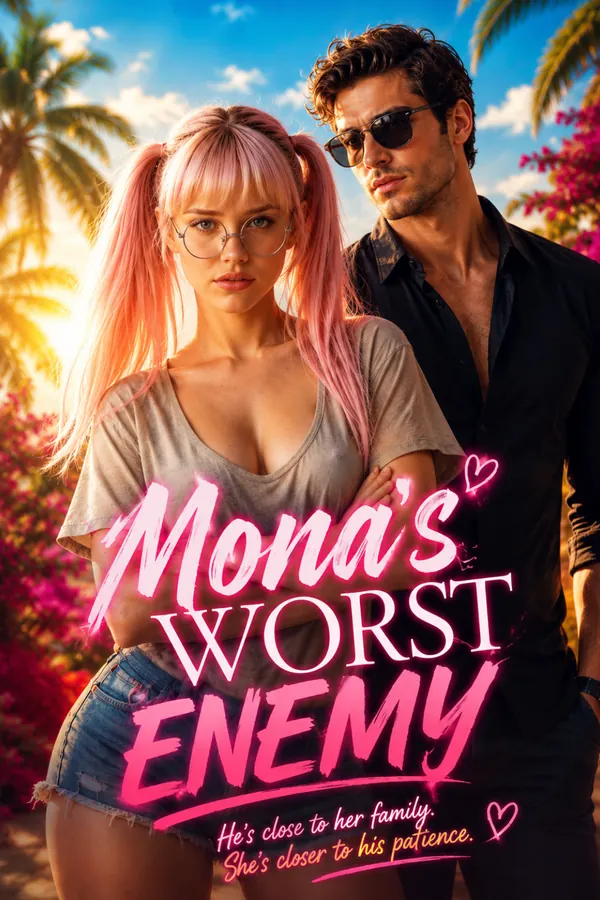
Mona's Worst Enemy review
Mona's Worst Enemy is a stepsibling rivalry story built around a sharp-tongued lead and a stepbrother she claims to despise. It is loud, repetitive and only occasionally clever, but the lead has real comic energy. It is also a long run for what it offers, with a cost to match. Treat it as a series for fans of bickering, not for people who want a plot.
The story so far
Her stepbrother David collects Mona, and she complains for the whole drive. He keeps glancing her way, and she snaps at him for it. The parents are away, so the pair have the house to themselves, and she grumbles about him to a friend while conceding, almost in passing, that she found the attention flattering.
In episode 2, David tells Mona to clear up the dishes. He strikes a deal: finish the chore and he will treat her to an evening out. She refuses, insults him, then gives in. Then comes a gift of clothes for the evening; she calls him gross, and takes it all the same. The setup is clear: they claim to hate each other, and neither of them is convincing.
What works
Mona is the reason to watch. Her eye-rolls, sarcasm and theatrical disgust give her a distinctive comic voice, and the series gets most of its energy from the way she reacts to everything David does. When she is on form, the scenes have a quick, bickering rhythm that feels like a real sibling argument turned up a notch.
The opening in the car is efficient. In one short scene, we learn who the two characters are, how they feel about each other and what the tension will be. It is a good use of a small space.
Episode 2 also deserves credit for a clear turn. The dishes, the offer and the outfit give the second half of the free part a direction, and the shift from household squabble to evening out makes the episode feel like it is going somewhere.
What doesn't
The insults wear thin. David's behaviour is repeated across both episodes, and Mona's replies follow the same shape, so the rivalry feels more like a loop than an escalation. There is scant plot ahead of the paywall, and the free episodes stop abruptly without much of a hook.
The runtime is also a factor. This is a long series, with fifteen episodes and a run of about twenty-two minutes, so the thin material has to stretch a long way. The AI look is typical, with a glossy finish and stiff movement, and David is more of a type than a character. The warmth that makes a rivalry enjoyable is mostly missing at this stage.
The free part
Both free episodes sit ahead of the paywall: the first with no login, the second with a no-cost one. Together they show the dynamic completely: the car ride, the rivalry, the dishes and the night out. That makes it easy to judge the humor and the lead. It also reveals the weakness, because the second episode hardly moves beyond the first. If the repetitive bickering already tires you, the free part has given you your answer.
Worth the tokens?
This is the most expensive run in this batch among the open series. Finishing takes one hundred and fifty-six tokens, which is thirteen paid episodes at twelve each. For a free part that sets up a rivalry and not much else, that is a big commitment. Nothing past the free pair has reached me, so whether the series develops is unknown to me. On the evidence of the free pair, it is only worth the spend if Mona herself is the draw and you are happy with more of the same.
Who it's for
It suits viewers who enjoy bickering, a sarcastic lead and a long, light run that asks little of them. Choose something else if you need affection early on, a developing plot or a modest budget. It is best sampled with the free pair before any tokens move.